
Watford City isn’t the kind of place that makes the national travel magazine lists. It’s a working oil patch town in McKenzie County, western North Dakota, and it owns that identity completely. But sitting 14 miles from one of the more dramatic landscapes in the American West — Theodore Roosevelt National Park — and surrounded by the Little Missouri Badlands, it has more going for it than the oilfield economy alone.
Whether you’re here on a work rotation trying to make the most of your off days, passing through on a western US road trip, or visiting the region specifically, Watford City and its surrounding McKenzie County area have enough genuine outdoor and cultural activity to fill a weekend without having to manufacture reasons to leave the room. This guide covers the best things to do in Watford City, ND — honest, specific, and organized for how people actually spend a weekend rather than how a tourism brochure presents it.
Theodore Roosevelt National Park: The Weekend Anchor
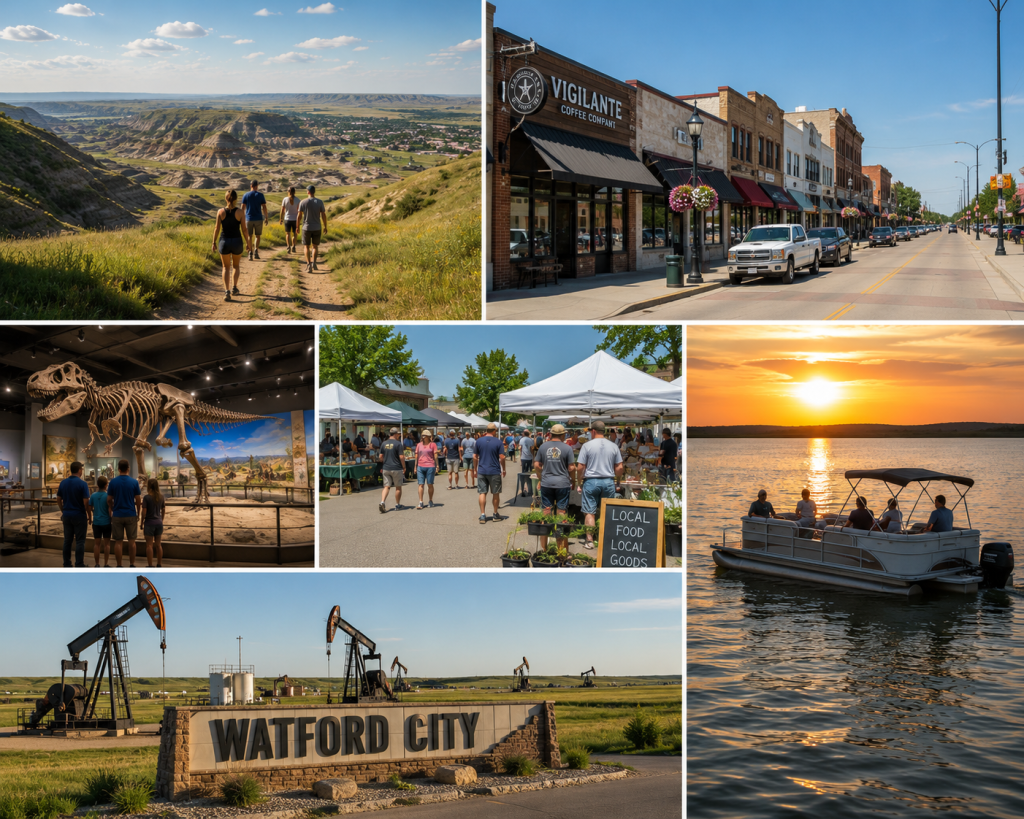
The North Unit of Theodore Roosevelt National Park — 14 miles south of Watford City on US-85 — is the single most significant attraction in the McKenzie County area and the reason the region gets any travel attention beyond the oilfield economy. It’s also one of the more genuinely undervisited units in the National Park system, which means that unlike the South Unit near Medora (which gets the majority of park visitors), the North Unit can still deliver the particular solitude that the badlands landscape was always supposed to produce.
The North Unit covers 24,070 acres of Little Missouri Badlands terrain — the sculpted buttes, coulees, and river bottom that Theodore Roosevelt famously said shaped his character during his cattle ranching years in the Dakota Territory in the 1880s. The 14-mile scenic drive from the park entrance to the Oxbow Overlook is the most accessible way to see the landscape; the overlook at the end gives a sweeping view of the Little Missouri River oxbow that is one of the genuinely remarkable viewpoints in the Northern Plains.
Wildlife in the North Unit
Theodore Roosevelt National Park is one of the best places in the continental United States to see wild bison at close range. The park’s bison herd — descended from a reintroduced population — numbers in the hundreds and roams across both units. In the North Unit, bison are frequently encountered along the scenic drive and at the river bottom areas near the Oxbow Overlook. Seeing a bison herd at close range in an open badlands landscape — not behind a fence, not in an enclosure, just in the terrain they’ve occupied for thousands of years — is one of those experiences that earns the National Park Service’s reputation in a way that a description doesn’t capture.
Feral horses, white-tailed and mule deer, pronghorn, and wild turkeys are all reliably present in the North Unit. Birding in the riparian corridor along the Little Missouri River produces species that the open grasslands don’t support — look for great horned owls, sharp-tailed grouse, and the raptors that the badlands terrain concentrates in numbers.
“The North Unit of Theodore Roosevelt National Park has the badlands to itself most days. If you’ve only been to the South Unit, the North feels like the park that the crowds haven’t reached yet — because they mostly haven’t.”
Hiking in the North Unit
The North Unit trail system is modest in scale but high in quality. The Achenbach Trail is the longest and most demanding — 18 miles with a Little Missouri River ford — and rewards the commitment with deep backcountry badlands terrain. For a weekend day hike that doesn’t require a ford, the Upper Petrified Forest Trail (3.7 miles) reaches petrified wood deposits and ridge-top badlands views that demonstrate the park’s geological depth. The Caprock Coulee Nature Trail (4.1 miles) is the best loop for first-time visitors who want the badlands landscape experience within a half-day. Bring more water than you think you need — the exposed badlands terrain in summer generates significant heat even on cool days, and there’s no water access within the trail system.
Downtown Watford City: The Local Scene
Watford City’s downtown has undergone significant development since the Bakken boom transformed the community — new construction, expanded commercial infrastructure, and the dining and services range of a small city rather than the small agricultural town it was before the energy economy arrived. Main Street has local restaurants, coffee shops, and the general commercial character of a community that’s been putting money back into its core.
Eating and Drinking in Watford City
The dining scene in Watford City reflects the community’s workforce character — hearty, substantial, and unpretentious. Local steakhouses and diners serve the agricultural and energy industry community that actually lives here, which means portions are real and prices are reasonable for western North Dakota. The bar scene on weekend evenings is the social gathering point for both the workforce population and the local community. For specific current restaurant recommendations, checking Google Maps or Yelp for Watford City produces the most accurate and current list — small-city restaurant situations change, and a static list from any guide goes stale faster than a search will.
The McKenzie County Heritage Park and Museum
Watford City attractions in the cultural category center on the McKenzie County Heritage Park — the outdoor museum complex on the east edge of town that preserves the agricultural and frontier heritage of the county through a collection of historic buildings, equipment, and artifacts from the pre-oil-boom era of McKenzie County history.
The heritage park is the kind of institution that rewards slow visitors — people who take the time to read the interpretive panels, look at the equipment, and think about what the Little Missouri Valley was like when homesteaders were trying to make a go of it in terrain that the climate and the land resisted at every turn. The combination of Theodore Roosevelt’s own history in the territory and the homesteader experience that followed his time there gives the McKenzie County heritage story specific depth.
Lake Sakakawea: A Full Day on the Water
Lake Sakakawea — the reservoir created by Garrison Dam on the Missouri River — is one of the largest reservoirs in the United States and covers the territory south and west of Williston with one of the most productive fisheries in the northern Plains. The lake’s arms extend toward Watford City, and several boat ramps and access areas in McKenzie County give lake access within a reasonable drive.
Walleye, northern pike, and smallmouth bass are the primary target species, and Lake Sakakawea produces trophy fish in all three categories with sufficient regularity to attract dedicated anglers from across the Upper Midwest. A weekend fishing trip on Lake Sakakawea — particularly in the northern arms nearest to Watford City — is a genuinely productive choice for anglers who want to take advantage of the off-rotation time that oilfield work schedules produce.
The Little Missouri State Park: Solitude in the Badlands
Little Missouri State Park, approximately 25 miles north of Watford City off US-85, is one of North Dakota’s least-visited state parks — a 5,748-acre roadless area of badlands terrain managed for horseback and foot access. There are no developed campgrounds with hookups, no visitor center, and no services. What there is: genuine backcountry solitude in the same kind of sculpted badlands landscape that makes Theodore Roosevelt National Park worth visiting, without the park designation and with even fewer people.
For weekend visitors who want the badlands without the drive to Medora and without the park entrance fee, Little Missouri State Park is the local alternative that residents know about and tourists rarely find. Confirm road and access conditions before visiting — the park’s rough-surface roads are not suitable for all vehicles in wet conditions.
Watford City weekend activities quick reference: Theodore Roosevelt National Park North Unit: 14 miles south on US-85. Scenic drive to Oxbow Overlook, bison, hiking. Best morning and evening for wildlife. Downtown Watford City: local dining, weekend social scene, Main Street development. McKenzie County Heritage Park: east edge of town. Agricultural and frontier history exhibits. Lake Sakakawea: walleye, pike, bass fishing. Northern arms nearest Watford City, several McKenzie County access points. Little Missouri State Park: 25 miles north on US-85. Roadless badlands. Solitude and scenery, no hookups.
For oilfield workers and long-term residents using Watford City as a home base who want to make the most of off-rotation weekends in the area, the oilfield worker housing information at Watford City RV Park covers the base camp logistics. The monthly RV sites in Watford City page gives current site and rate information for extended stays. Travelers approaching from the Beulah and central North Dakota corridor can check the RV park near Beulah, ND page for that direction. And for all the details about the park, Watford City RV Park is the starting point.
Frequently Asked Questions
How far is Theodore Roosevelt National Park from Watford City?
The North Unit of Theodore Roosevelt National Park is approximately 14 miles south of Watford City on US-85 — a drive of about 15 to 20 minutes. The South Unit, which is the more visited entrance near Medora, is approximately 70 miles south of Watford City via US-85 through Belfield. For a day trip from Watford City, the North Unit is the obvious choice — closer, less visited, and equally dramatic in landscape quality. The park’s entrance fee applies to both units; the America the Beautiful annual pass covers it.
Is there a fee to enter Theodore Roosevelt National Park?
Yes. Theodore Roosevelt National Park charges a per-vehicle entrance fee for the North and South Units (the Elkhorn Ranch Unit is free). The America the Beautiful National Parks Pass — available at any National Park entrance station or online at store.usgs.gov/the-national-map — covers entrance to Theodore Roosevelt and all other National Park Service fee sites for 12 months and is typically worth the cost for anyone visiting two or more fee parks in a year. Current fee amounts are confirmed at the park’s website (nps.gov/thro) or at the entrance station.
What is the best time of year to visit Watford City and the North Unit?
Late spring through early fall (May through September) is the main visitor season — the scenic drive is fully accessible, wildlife activity is high, and the badlands terrain is at its most visually dramatic. June through August produces the most wildflower and full-green riparian corridor color alongside the maximum wildlife activity. September is particularly excellent — cooler temperatures, reduced visitor volume, and the beginning of the fall color in the cottonwood corridors along the Little Missouri. Winter visits are possible and can be spectacular for the experienced cold-weather traveler who wants the park essentially alone, but the North Dakota winter at this latitude (47°N) requires full cold-weather preparation for temperatures that regularly reach -20°F or below.
Is there good fishing near Watford City, ND?
Yes. Lake Sakakawea, one of the largest reservoirs in the United States, provides excellent walleye, northern pike, and smallmouth bass fishing with several access points in McKenzie County within reasonable drive of Watford City. The lake is consistently rated among the top walleye fisheries in the country. The Little Missouri River within Theodore Roosevelt National Park provides catch-and-release fishing for smallmouth bass in the summer months. North Dakota fishing licenses are required for state residents and non-residents; the North Dakota Game and Fish Department website (gf.nd.gov) has current license information and access point details for McKenzie County waters.
What are the best hikes in Theodore Roosevelt National Park near Watford City?
The North Unit has several trails worth prioritizing based on available time. The Caprock Coulee Nature Trail (4.1-mile loop) is the best single-day introduction to the North Unit’s badlands terrain — accessible, scenic, and giving a full badlands experience without a difficult ford. The Upper Petrified Forest Trail (3.7 miles out and back) reaches petrified wood deposits and ridge-top views. The Buckhorn Trail (11 miles) is a backcountry loop for experienced hikers wanting a full-day immersion in the interior terrain. The 14-mile scenic drive from the entrance to the Oxbow Overlook is worthwhile for any visitor regardless of trail plans — the overlook at the end is one of the most impressive viewpoints in North Dakota.
Are there family-friendly activities in the Watford City area?
Yes. Theodore Roosevelt National Park is inherently family-friendly — the wildlife viewing in particular (bison, deer, feral horses) requires no physical exertion and produces the kind of close wildlife encounter that children respond to powerfully. The Caprock Coulee Nature Trail is appropriate for older children and families with moderate hiking ability. McKenzie County Heritage Park on the east edge of Watford City is good for families interested in frontier history. The Watford City Recreation Center provides indoor swimming and fitness facilities for those with active children who need structured physical activity on off days. Lake Sakakawea fishing from shore or from a boat is a classic family activity that the lake’s accessible bank points near the city support.