

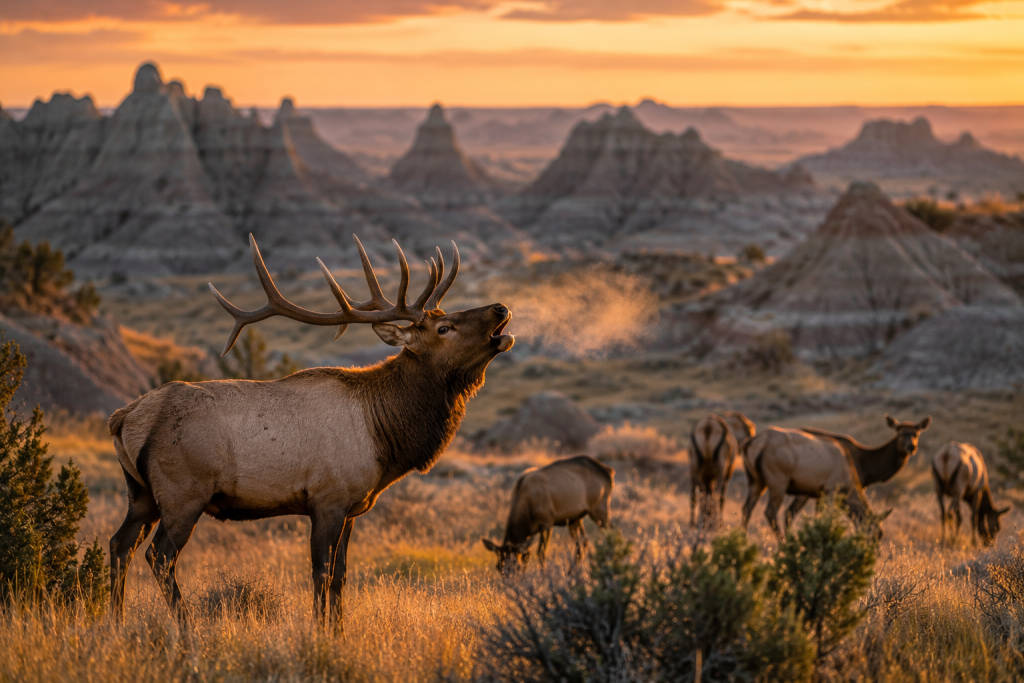
There’s a specific sound that defines fall in elk country, and it’s unlike anything else in the natural world — a haunting, rising whistle-roar that carries for miles across open badlands terrain. If you’re in or near Theodore Roosevelt National Park as the season turns, knowing when to listen for it and where you’re actually likely to hear it makes the difference between catching the show and missing it entirely.
Elk bugling is genuinely one of the more dramatic wildlife experiences available in the Northern Plains, and it’s tied specifically to the rut — the fall breeding season when bull elk compete aggressively for access to females. Understanding the timing and the honest picture of where elk actually are in the park sets you up for a real chance at experiencing it, rather than a disappointing drive with nothing to show for it.
What Elk Bugling Actually Is
Bugling is a distinctive vocalization combining roaring and whistling at the same time, used primarily by bull elk competing for dominance and access to cows during the rut. Beyond bugling itself, elk communicate through squealing, barking, chirping, mewing, and body language, but the bugle is the sound most people specifically travel to hear — a genuinely eerie, carrying call that’s unmistakable once you’ve heard it, echoing across the Badlands’ open terrain in a way that few other wildlife sounds can match.
When the Rut Happens
Elk rut, or mating season, occurs in late summer and fall, with the most active bugling and competitive behavior concentrated during September and into October. During this window, bulls become considerably more aggressive, charging at each other and locking antlers in genuine physical battles for dominance and mating access. This behavioral shift is what produces the specific sounds and visible displays that make the rut such a compelling wildlife-watching season, distinct from the quieter, less dramatic elk behavior seen during the rest of the year.
“The first time you hear an elk bugle echo across the badlands at dusk, it stops you in your tracks. It’s not like anything else out there — this rising, whistling roar that carries forever in that open terrain. Once you’ve heard it, you understand exactly why people specifically plan trips around this time of year.”
Where Elk Actually Are in the Park: An Honest Picture
This is worth being direct about, since it matters for planning an accurate trip: Theodore Roosevelt National Park’s elk population is most reliably associated with the South Unit near Medora, where a thriving population has rebounded successfully following reintroduction efforts in the 1980s. The South Unit’s mixed grasslands and badlands topography support several hundred elk, and the park’s 36-mile Scenic Loop Drive, particularly around Buck Hill and Painted Canyon overlooks, offers well-established viewing opportunities where visitors can survey large areas with binoculars or a spotting scope.
Elk sightings in the North Unit, closer to Watford City, do occur, particularly in the valleys near the Little Missouri River, and some wildlife guides specifically note elk as part of the North Unit’s wildlife community. However, the North Unit’s elk presence is generally less consistently documented than the South Unit’s more established, actively managed population. For visitors specifically prioritizing elk and rut activity as the primary goal of a trip, the South Unit is the more reliable bet, while North Unit visitors should treat any elk sighting as a genuine bonus rather than a guaranteed part of the visit.
Confirming Current Conditions
Because elk range and activity shift seasonally, and animals move beyond park boundaries at times, checking with park rangers at either unit’s visitor center for current sighting locations and rut activity is worth doing before setting out, particularly for visitors making a special trip specifically to experience the bugling season. Current park population estimates for the whole park run in the range of 150 to 200 elk, though numbers vary with seasonal movement.
Best Times of Day for Rut Viewing
Early morning and evening hours consistently provide the best elk viewing opportunities, when animals emerge from wooded or sheltered areas to graze in open grasslands and, during the rut specifically, when bulls are most vocally active. Dawn and dusk aren’t just more comfortable viewing windows temperature-wise — they align directly with elk activity patterns, making them the practical choice for anyone specifically hoping to witness bugling or rutting behavior rather than simply hoping to get lucky at any random time of day.
What Else Is Active in the Badlands This Fall
Elk aren’t the only wildlife worth watching for as the season turns. The same fall timing that brings elk rut activity also affects other Badlands wildlife, and a fall visit built around watching for elk pairs naturally with the region’s other established wildlife-viewing traditions. The bison-watching guide for the North Unit covers the park’s more consistently visible large mammal — the North Unit’s bison herd is a genuinely reliable sighting regardless of season, making it a strong complement to a fall trip focused primarily on elk activity in the South Unit or wherever current sightings are concentrated.
Planning a Fall Badlands Trip Around Wildlife Viewing
If elk and the rut are your primary goal, structuring a trip that includes time in the South Unit near Medora, alongside your North Unit-based stay near Watford City, gives you the most complete picture of the park’s wildlife across both units rather than limiting yourself to whichever unit is closer to your accommodation. The South Unit sits roughly 80 miles south of the North Unit, connected by the longer Maah Daah Hey Trail corridor for those interested in the full badlands landscape between the two units, or a more direct highway route for visitors simply making a day trip between units.
For visitors building a broader Theodore Roosevelt National Park trip that covers both wildlife viewing and the park’s other highlights, the planning a Theodore Roosevelt National Park trip guide covers the broader trip-planning picture, including how to structure a visit that makes the most of a Watford City base while still accessing the park’s full range of scenery and wildlife.
Elk bugling season — quick reference: What it is: a distinctive roar-whistle vocalization from bull elk competing for dominance and mates during the rut. Timing: rut occurs late summer through fall, with peak bugling and competitive activity in September into October. Where elk are most reliable: South Unit near Medora, following successful 1980s reintroduction. 36-mile Scenic Loop Drive, Buck Hill and Painted Canyon overlooks are established viewing spots. North Unit elk: sightings do occur, particularly in Little Missouri River valleys, but less consistently documented than the South Unit population. Treat as a bonus, not a guarantee. Best viewing times: early morning and evening — aligns with both elk activity patterns and more comfortable temperatures. Park-wide estimate: roughly 150-200 elk, with seasonal movement affecting numbers at any given time. Confirm before a special trip: check with park rangers at either unit’s visitor center for current sighting locations and rut activity.
For travelers planning a fall Badlands trip based out of Watford City, Watford City RV Park gives easy access to the North Unit and a practical base for a day trip south to the South Unit if elk viewing is a priority for your visit.
Frequently Asked Questions
When do elk bugle in the fall at Theodore Roosevelt National Park?
Elk rut, or mating season, occurs in late summer and fall, with the most active bugling and competitive behavior concentrated during September and into October. During this window, bull elk become considerably more aggressive and vocal as they compete for dominance and access to females, producing the distinctive bugling calls that draw wildlife watchers to the park during this specific season.
Where in Theodore Roosevelt National Park are elk most reliably seen?
Elk are most reliably associated with the South Unit near Medora, where a thriving population has rebounded successfully since reintroduction efforts in the 1980s. The South Unit’s 36-mile Scenic Loop Drive, particularly around Buck Hill and Painted Canyon overlooks, offers established viewing opportunities. Elk sightings do occur in the North Unit as well, particularly in valleys near the Little Missouri River, but this population is less consistently documented than the South Unit’s more established herd, so North Unit visitors should treat an elk sighting as a genuine bonus rather than a guaranteed part of their visit.
What does elk bugling sound like?
Elk bugling is a distinctive vocalization combining roaring and whistling at the same time, produced primarily by bull elk during the rut as they compete for dominance and access to females. It’s an eerie, carrying sound that echoes across open terrain like the Badlands, and is genuinely unlike any other common wildlife sound, which is why it draws dedicated wildlife watchers to the park specifically during rutting season.
What time of day is best for elk viewing during the rut?
Early morning and evening hours consistently provide the best elk viewing opportunities, since animals emerge from wooded or sheltered areas to graze in open grasslands during these cooler periods, and bulls tend to be most vocally active around dawn and dusk during rutting season. These windows align with both elk activity patterns and more comfortable viewing temperatures, making them the practical choice for anyone specifically hoping to witness bugling or rutting behavior.
How many elk live in Theodore Roosevelt National Park?
Current estimates suggest the park’s overall elk population ranges from approximately 150 to 200 individuals, though numbers shift seasonally as animals move beyond park boundaries and between habitat areas. The South Unit supports the more established, actively managed population, while North Unit numbers are less consistently documented. Checking with park rangers for current population and sighting information is worthwhile for visitors planning a trip specifically around elk viewing.
Can I see both elk and bison in Theodore Roosevelt National Park?
Yes, both species live in the park, though their reliability as a sighting varies by unit and season. Bison are a genuinely consistent, reliable sighting, particularly in the North Unit, regardless of season. Elk, particularly during the fall rut, are more reliably viewed in the South Unit near Medora. A trip that includes time in both units, or that treats elk sightings in the North Unit as a bonus alongside a more dependable bison-watching experience, gives visitors the most complete wildlife-viewing picture across a fall Badlands visit.