

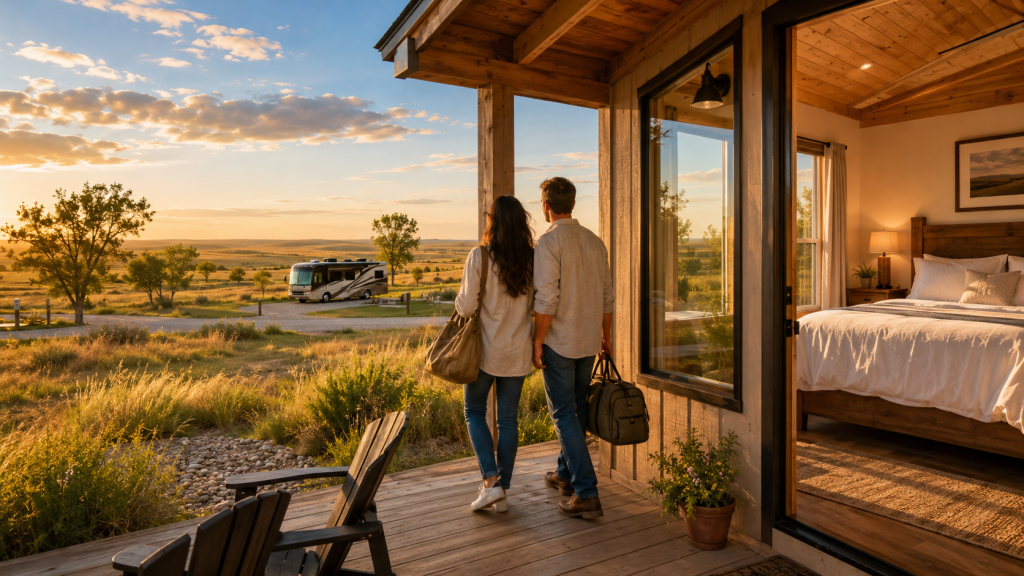
Most people passing through Watford City in July are here for one specific reason: Theodore Roosevelt National Park’s North Unit is 14 miles down the road, and the badlands terrain it protects is exactly the kind of landscape that doesn’t photograph the same from a car window as it does when you’ve actually walked into it. What a lot of first-time visitors don’t expect is how well a base in Watford City itself rounds out that experience — the park in the morning, the open prairie at golden hour, and a genuinely comfortable place to land at the end of the day.
Watford City sits at the edge of two things that don’t usually get paired in the same sentence: the working heart of the Bakken oil region and the entrance to one of the more underrated units of the National Park System. That combination gives the town a specific, useful character for travelers — genuine services and infrastructure that a purely tourist town wouldn’t necessarily have, paired with immediate access to badlands terrain that feels like it belongs nowhere near an interstate.
The Park: Theodore Roosevelt National Park’s North Unit
The North Unit, 14 miles south of Watford City on US-85, is smaller and considerably less visited than the park’s South Unit near Medora, and that’s exactly its appeal for travelers who want the badlands experience without South Unit’s relative crowds. The 14-mile scenic drive to Oxbow Overlook takes you through terrain that shifts between river-bottom cottonwood groves and exposed butte-and-coulee badlands, with bison, wild horses, and pronghorn all genuinely likely sightings rather than a hopeful possibility.
The North Unit rewards an early start specifically in July — arriving at or before 7 a.m. puts you on the scenic drive while wildlife activity is at its peak and before the day’s heat has fully arrived, and the morning light on the badlands terrain is dramatically better for both viewing and photography than the flatter light of midday. A full loop with stops at the river bottom pullouts and the Oxbow Overlook typically takes 2 to 3 hours at an unhurried pace, which fits comfortably into a morning before returning to Watford City for the heat of the afternoon.
The Prairie: What’s Easy to Miss Between the Park Visits
The badlands terrain inside the park boundary is dramatic, but the open prairie surrounding Watford City itself has its own specific character that travelers passing through quickly, focused only on the park, tend to miss entirely. The Northern Plains grassland stretching in every direction from town — genuinely flat to gently rolling, punctuated by the pump jacks and infrastructure of the working oil region — produces its own version of the “big sky” experience that the Dakotas are known for, and it’s most visible and most beautiful specifically in the hour before sunset.
Golden Hour on the Open Land
At Watford City’s latitude, July sunset runs around 9:28 to 9:32 p.m., and the hour before it produces the specific quality of prairie light that photographers and long-time locals both point to as one of the underrated experiences of a Bakken summer — long shadows, warm color across the grassland, and a horizon that extends far enough in every direction that the sky itself becomes the main subject. A drive out any of the county roads surrounding Watford City in the last hour before sunset, with no specific destination beyond finding an open pull-off, is a genuinely worthwhile evening activity that costs nothing and requires no advance planning.
“People come here for the badlands and don’t expect the prairie itself to be part of the experience. But that last hour of light on open grassland, with the pump jacks working steady in the distance and absolutely no one else around, is its own specific kind of Northern Plains beauty that the park brochures don’t really capture.”
The Bed: Why Where You Land at Night Actually Matters Here
Watford City’s specific position — close enough to the park for an easy morning departure, developed enough to offer real services and comfortable accommodation options — makes the choice of where to stay a genuinely meaningful part of planning a North Unit visit, more so than it might be near a more heavily developed national park gateway town.
RV Stay vs. Cabin: What Actually Fits Your Trip
For travelers with their own RV, a full-hookup site gives the flexibility to manage the day’s heat comfortably (running AC through the afternoon after a morning at the park) and the practical convenience of cooking your own meals and having your own space after a full day outdoors. For travelers without an RV, or those who want a break from RV logistics specifically for this leg of a longer trip, a cabin option gives the comfort of a real bed and full climate control without needing to tow or drive a rig through the region.
Neither option is objectively better — it depends on what the rest of your trip looks like and what you’re prioritizing for this specific stop. A multi-week road trip already built around RV travel benefits from staying in that same mode through Watford City. A shorter, more targeted trip specifically to see the park might benefit from the simplicity of a cabin stay that doesn’t require managing a rig at all.
What a Comfortable Base Actually Does for the Trip
The practical value of a genuinely comfortable Watford City base — reliable AC, a real shower after a dusty park morning, a kitchen or kitchenette for cooking rather than relying entirely on the town’s limited dining options — compounds across a multi-day stay in a way that’s easy to underestimate when booking. A rough or uncomfortable base makes each subsequent park visit feel more like an endurance test; a genuinely comfortable one makes the whole trip feel sustainable rather than something you’re pushing through.
Building a Simple Two-Day Itinerary
For travelers with two full days in the area, a simple structure works well: Day one, an early North Unit morning covering the full scenic drive and Oxbow Overlook, return to the resort by early afternoon for rest and AC through the heat, then an evening prairie drive for sunset. Day two, a return to the park focused on whatever you didn’t fully cover the first day — a specific overlook, more time at the river bottom for wildlife, or simply a slower second pass through the scenic drive — followed by an afternoon exploring Watford City itself or resting before another evening prairie drive or a quieter evening at the resort.
This structure avoids the common mistake of trying to cram the park into a single rushed morning and then having nothing else planned — the prairie evening activity and the comfortable midday base give the trip actual rhythm rather than a single checklist item followed by empty time.
A traveler’s Watford City July — quick reference: The park: Theodore Roosevelt NP North Unit, 14 mi south on US-85. Arrive by 7 a.m. for wildlife and light. 14-mile scenic drive to Oxbow Overlook, 2-3 hrs at an unhurried pace. The prairie: golden hour drive on any county road surrounding Watford City in the hour before sunset (~9:28-9:32 p.m. in July). No destination needed — just open sky and grassland light. The bed: RV site (full hookup, own space/kitchen, AC flexibility) vs. cabin (real bed, full climate control, no rig logistics) — pick based on the rest of your trip, not one over the other universally. Two-day rhythm: Day 1 = early park morning + midday rest + evening prairie drive. Day 2 = second park pass or town time + another quiet evening. Why the base matters: a genuinely comfortable stay compounds across a multi-day trip — it’s the difference between the trip feeling sustainable and feeling like an endurance test.
For travelers planning an extended Bakken and badlands trip, the monthly RV sites in Watford City give the rate structure for a longer stay. Oilfield workers and long-term Bakken residents who want the same base-camp comfort for extended stays can check the oilfield worker housing at Watford City RV Park. Travelers approaching from the Beach, ND corridor to the west can check the RV park near Beach, ND page. And for planning any Watford City stay with a North Unit visit in mind, Watford City RV Park is the starting point.
Frequently Asked Questions
How far is Theodore Roosevelt National Park’s North Unit from Watford City?
The North Unit entrance is approximately 14 miles south of Watford City on US-85, a drive of about 20 minutes. The unit’s 14-mile scenic drive to the Oxbow Overlook takes an additional 2 to 3 hours to complete at an unhurried pace with stops at the river bottom pullouts and overlooks along the way. This proximity makes Watford City a practical and comfortable base for a North Unit visit, allowing an early morning departure for the park and a return to a comfortable accommodation for the heat of the afternoon.
Should I stay in an RV or a cabin for a Watford City trip?
The right choice depends on the broader shape of your trip rather than one option being universally better. Travelers already road-tripping in their own RV benefit from staying in that mode through Watford City, with the flexibility of full hookups, their own kitchen, and independent AC management. Travelers without an RV, or those who want a break from RV logistics for this specific leg of a trip, benefit from a cabin option that provides a real bed and full climate control without the need to manage a rig. Both options give a comfortable base for early North Unit mornings and restful afternoons.
What time should I visit Theodore Roosevelt National Park’s North Unit in July?
Arriving at or before 7 a.m. is the recommended timing for a July North Unit visit, since wildlife activity — bison, wild horses, pronghorn — peaks in the morning hours before the day’s heat sets in, and the morning light produces significantly better viewing and photography conditions than the flatter light of midday. A full scenic drive loop with stops typically takes 2 to 3 hours at an unhurried pace, fitting comfortably into a morning before returning to a comfortable base for the afternoon heat.
What time does the sun set in Watford City in July?
At Watford City’s latitude (approximately 47.8°N), sunset in July occurs between roughly 9:28 and 9:32 p.m., with the hour before sunset producing particularly strong golden-hour light across the open prairie surrounding the town. A drive on any of the county roads around Watford City during this window, without a specific destination, is a low-effort way to experience the open Northern Plains landscape at its most visually striking, complementing a North Unit visit rather than competing with it for time.
Is Watford City a good base for visiting Theodore Roosevelt National Park?
Yes. Watford City’s position 14 miles from the North Unit entrance, combined with the town’s genuine services and infrastructure (supported by its role in the Bakken oil region), makes it a practical and comfortable base for park visitors — offering both the proximity needed for an easy morning park visit and the amenities of a developed town, which some more remote national park gateway communities don’t offer to the same degree. The combination of easy park access and comfortable accommodation options, whether RV or cabin, supports a multi-day visit without requiring guests to choose between convenience and comfort.
What wildlife can I expect to see at the North Unit in July?
The North Unit’s bison herd (managed at approximately 100 to 300 animals), free-roaming horses, pronghorn antelope, and white-tailed and mule deer are all commonly sighted along the scenic drive, particularly during the morning and evening hours when animal activity peaks. The river bottom sections of the drive (roughly miles 3 to 6) are especially reliable for wildlife sightings due to the shade and forage available near the Little Missouri River. Arriving early in the morning, ideally by 7 a.m. in July, gives the best combination of wildlife activity and comfortable temperatures for an unhurried scenic drive.